Bob Fosse, Michael Jackson, and the Dance Move That Keeps Reappearing
A viral Bob Fosse clip from The Little Prince shows how dance influence travels: through posture, costume, camera grammar, and repeated reinvention.
Bob Fosse, Michael Jackson, and the Dance Move That Keeps Reappearing
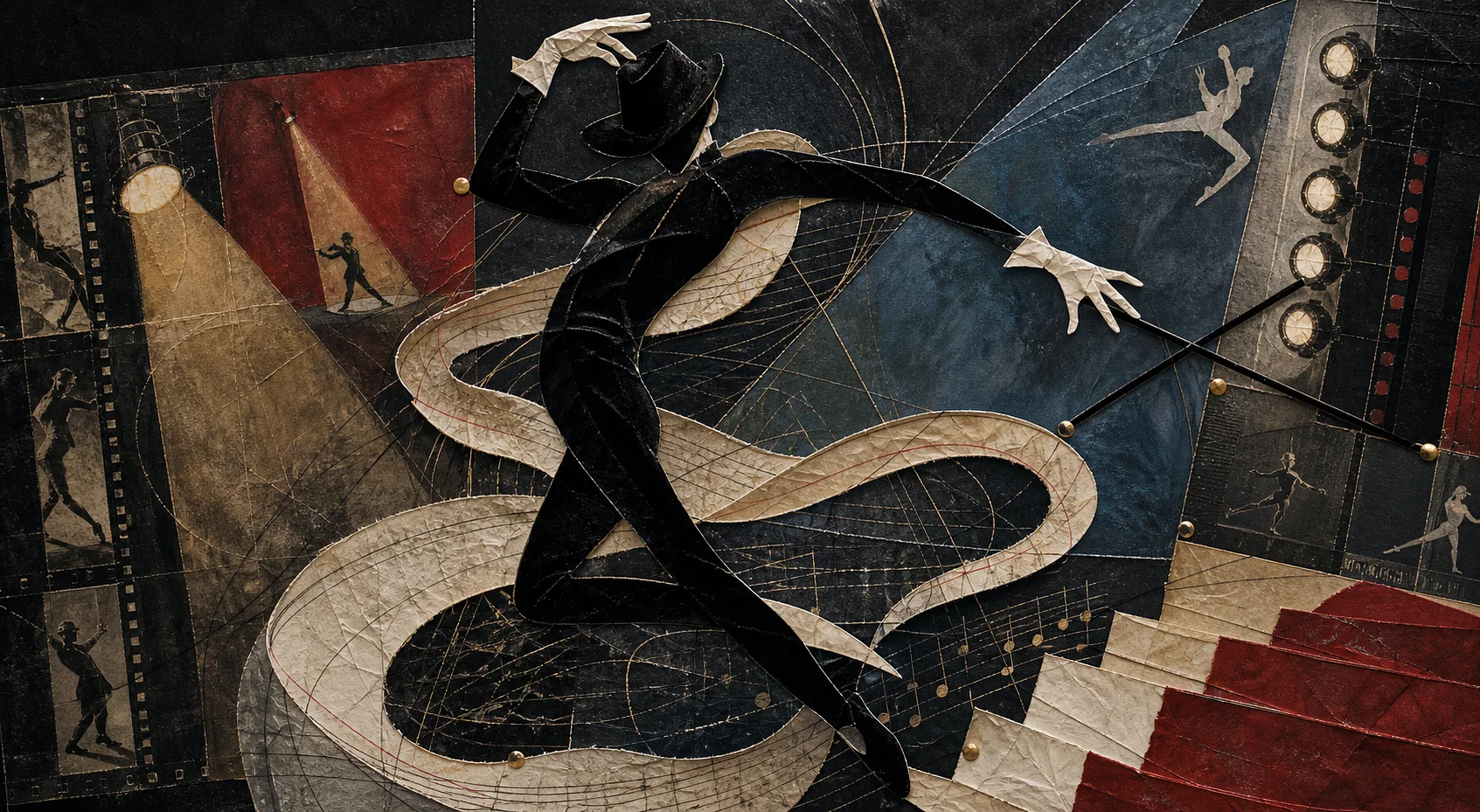
A clip of Bob Fosse dancing as The Snake in Stanley Donen’s 1974 musical The Little Prince resurfaced on Reddit because it looks startlingly familiar to anyone who knows Michael Jackson’s stage vocabulary: the black silhouette, the hat, the isolations, the slinky footwork, the body turning into punctuation.
The claim should be handled carefully. Influence in dance is rarely a clean receipt. But in this case, reputable cultural sources have long noticed the connection. Smithsonian Magazine described Fosse’s style as an influence on Michael Jackson, and the Harvard Film Archive specifically frames Fosse’s black-clad Snake routine as an inspiration.
What the Clip Shows
Fosse plays The Snake with a controlled menace: knees angled inward, shoulders precise, hands snapping into hard shapes, pelvis and torso moving as separate instruments. The performance is comic, eerie, seductive, and mechanical all at once. That combination became part of Fosse’s broader signature, visible across stage and screen work from Sweet Charity to Chicago.
What later viewers recognize in Jackson is not a single stolen step so much as a grammar: black-and-white contrast, hat-and-shoe silhouette, isolated joints, sideways glide, sudden freezes, and the idea that a dancer can make stillness feel as dramatic as motion.
Influence Is Not a Straight Line
Jackson’s movement vocabulary also drew from James Brown, Fred Astaire, Sammy Davis Jr., street dance, mime, tap, and the video era’s own camera logic. Fosse belongs in that lineage because his choreography already understood the screen. Smithsonian notes that Fosse helped shape a film grammar that anticipated music-video dance: fragments, cuts, angles, and bodies choreographed for the lens.
That matters because Jackson’s genius was synthesis. He did not simply preserve older musical-theater gestures. He recombined them inside pop spectacle, short-film music videos, arena choreography, and an instantly legible personal silhouette.
The Lean Had Its Own Technology
One reason the conversation can get muddled is that people often mix the Fosse influence with Jackson’s later “Smooth Criminal” anti-gravity lean. That move involved stage technology as well as dance technique. The National Archives’ DocsTeach record identifies U.S. Patent 5,255,452, dated October 26, 1993, for the shoes used to create the anti-gravity illusion in performance.
So the lineage is layered: Fosse helps explain some of the style and theatrical vocabulary; patent engineering helps explain one of Jackson’s most famous impossible-looking stage effects.
Why the Clip Still Lands
The Reddit reaction makes sense because archival dance has a way of collapsing time. A 1974 film-musical number can suddenly look like a lost blueprint for 1980s pop, which then looks like a blueprint for everything that followed. The delight is not in catching one artist copying another. It is in seeing how performance ideas travel, mutate, and become common language.
Sources
- Smithsonian Magazine: Bob Fosse's influence and screen grammar
- Harvard Film Archive: The Little Prince and Fosse as The Snake
- National Archives DocsTeach: Patent for Anti-Gravity Shoes
Reddit was reviewed for topic discovery and audience reaction, not as evidence for factual claims.