The Last Two Northern White Rhinos Are Not the Whole Story
Najin and Fatu are the last living northern white rhinos, but the rescue effort now lives in embryos, surrogates, genetics, and hard-won reproductive science.
The Last Two Northern White Rhinos Are Not the Whole Story
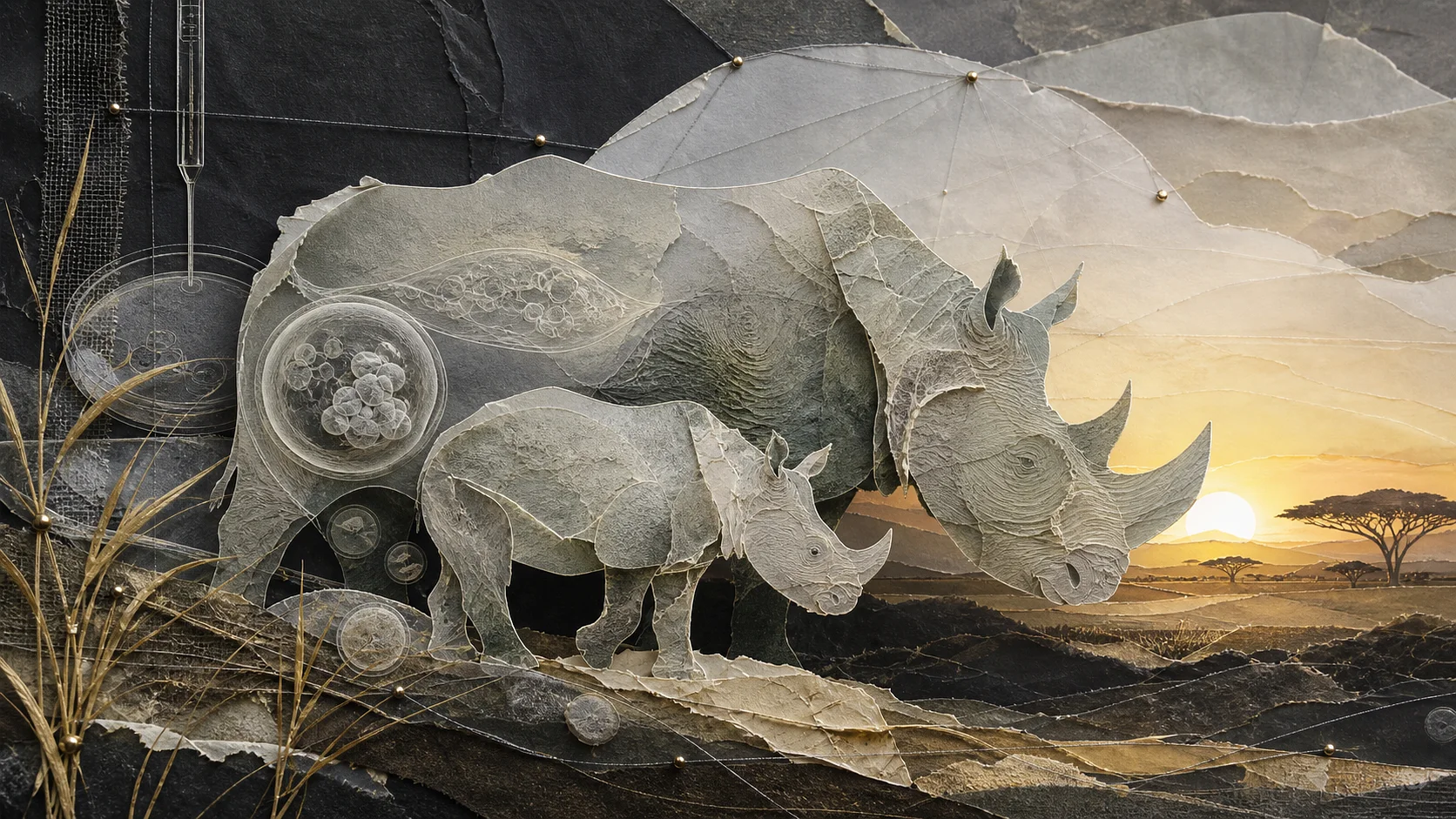
The Reddit headline was blunt: two females, zero males, the last two northern white rhinos on Earth. That is true as far as living animals go. Ol Pejeta Conservancy says only Najin and Fatu remain, both living under protection in Kenya.
But the phrase “the end of a species” is incomplete. The biological rescue effort did not end when Sudan, the last male northern white rhino, died on March 19, 2018. It moved into a more technical, fragile phase: egg collection, frozen sperm, embryo creation, surrogate southern white rhino mothers, and stem-cell work meant to widen the future gene pool.
Ol Pejeta Conservancy, Laikipia County, Kenya
Najin and Fatu live at Ol Pejeta Conservancy in Kenya, where much of the assisted reproduction work is coordinated.
Where the Rescue Effort Stands
BioRescue reported on August 25, 2025 that the consortium had produced three additional northern white rhino embryos in 2025, bringing the total to 38 pure northern white rhino embryos. The same update said the team had begun transfers of pure northern white rhino embryos into southern white rhino surrogate mothers.
That is not the same as success. BioRescue said transfer attempts in July 2024, December 2024, and May 2025 had not produced a lasting pregnancy. The December attempt showed signs that required follow-up analysis, but did not confirm northern white rhino DNA.
Why Two Living Animals Still Matter
Najin and Fatu are not able to carry pregnancies naturally, according to BioRescue. Fatu has nevertheless been central to the program because repeated oocyte collections have supplied eggs for embryo creation. The embryos are produced using sperm preserved from deceased northern white rhino males.
The scientific challenge is larger than producing one calf. A viable recovery would need births, health, genetic diversity, long-term care, and eventually a managed path back toward former range. San Diego Zoo Wildlife Alliance notes that genetic work on northern and southern white rhinos is part of the broader plan to understand whether a recoverable founding population is possible.
The Hard Part of Hope
Online discussion often swings between despair and technological optimism. The careful answer is less cinematic: this is still a rescue attempt, not a resurrection already achieved. Every failed transfer teaches the team something, but every year also narrows the living connection to Najin and Fatu.
The northern white rhino story is therefore not just a symbol of extinction. It is a test of whether conservation can keep moving after conventional breeding has already failed.
Sources
- BioRescue: embryos and embryo-transfer update
- Ol Pejeta: northern white rhinos
- Ol Pejeta: Sudan's death in 2018
- San Diego Zoo Wildlife Alliance: white rhino conservation science
Reddit was reviewed for topic discovery and reader questions, not as evidence for factual claims.